


Folders for Contractors & the Trades

From Bid to Closeout:
Construction and trade jobs generate paperwork at every stage — estimates, plans, permits, inspection records, warranties, and final invoices. The contractors who stay organized from the first meeting to final closeout know that different documents call for different tools. This guide covers how each folder type fits into the project lifecycle, and which customers and situations call for each one.

On the Job: Standard Folders

Standard folders keep job site paperwork organized and within reach. On multi-trade jobs, they help ensure subcontractors are working from the same set of information, rather than chasing down the latest version of a plan or change order.
At project close, a presentation folder holding the final invoice, warranty information, and maintenance instructions brings the job to a clean finish and reduces follow-up calls that eat into a contractor’s time after the crew has moved on.
Who needs these: General contractors, project managers, and any trade running jobs with more than one moving part. Volume buyers in this category tend to reorder regularly because folders get marked up, rained on, and left behind.
The upsell: When a contractor mentions concerns about durability, counter with upgrade options like heavier paper stock and lamination. Contractors managing larger jobs can quickly outgrow standard two-pocket folders. If they’re mentioning permits, mult-page work orders, or inspection packets, that’s the opening for a box pocket conversation.
At the Client Meeting: Literature Folders
Literature folders support the early stages of the sales process by presenting information in a clean, professional format. They’re sized for estimates, service options, warranty details, and company credentials - everything a homeowner or property manager needs to review while decisions are being made.
For two-step estimate processes, leaving a folder behind after an initial visit keeps key details in front of the customer and reinforces the professionalism of the business behind the bid. For remote estimates, a quote arriving in a branded mailer stands out and signals an established contractor.
Who needs these: Remodelers, roofing contractors, HVAC companies, and any trade that sells directly to homeowners or property managers. If a contractor mentions losing jobs during the presentation stage or trying to look more established, it opens the door to a conversation about literature folders.
The upsell: Use literature folders as an entry point to a longer product conversation. Contractors who buy literature folders for proposals are also running jobs, which means they need folders for the field too.
Room To Grow: Box Pocket Folders
Drawings, permits, inspection sign offs, and multi-page work orders can overwhelm a standard two-pocket folder. Box pocket folders keep complete document packets together and protected as they move between job site, truck, and office - without pages sliding out or corners getting bent.
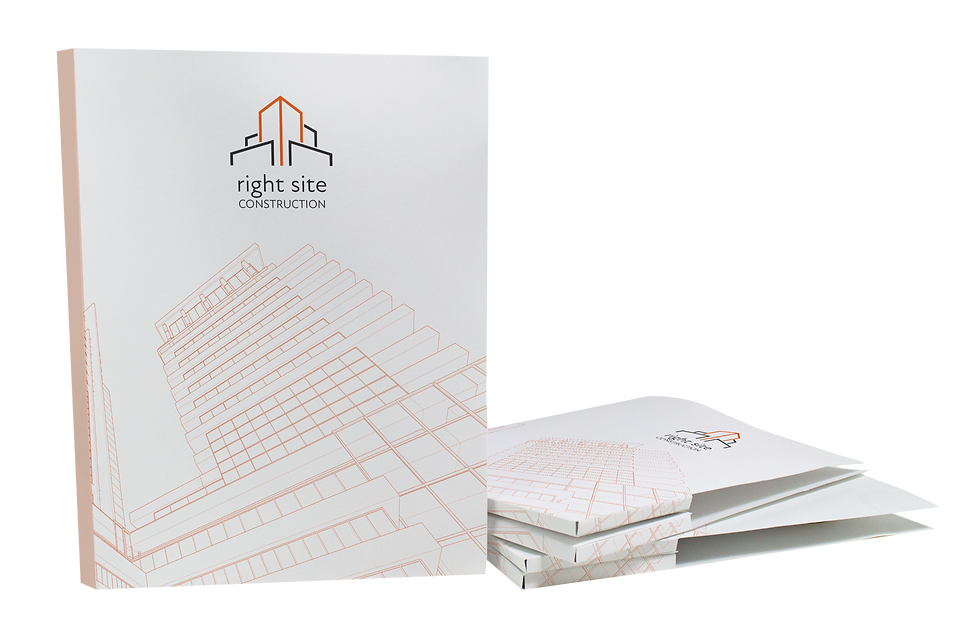
Arriving at an inspection with everything organized in a folder that opens flat speeds up the process. Handing a site foreman a complete packet on day one means the right paperwork is on site from the start. When multiple subs need to reference the same plans, a durable folder keeps the job running off accurate information.
Who needs these: General contractors, commercial contractors, MEP trades, and anyone managing permit-heavy or inspection-heavy work. The more regulated the trade, the more this product earns its place.
The upsell: Contractors who need box pocket folders in the field also need file folders in the office. These two products cover opposite ends of the same job, and contractors who buy one almost always need the other.
Back at the Office: File Folders
File folders support long-term project records after a job is complete. Permits, compliance documentation, billing history, and correspondence stay organized and easy to retrieve if questions arise later, whether that’s a warranty issue two years down the road or a compliance review no one saw coming.
Setting up a set of files at the start of each project ensures every document has a place from day one. Contractors with a document management system never find themselves trying to reconstruct a paper trail from memory or scattered emails.
Who needs these: Every contractor, eventually. This is a baseline product for any business that pulls permits, carries warranties, or works in regulated trades. It’s also a natural add-on for any customer already buying folders for the job site, because paperwork used on the job needs somewhere to go after closeout.
General Contractors: Managing the Full Picture
Literature folders — Bid presentations and client handoffs
Standard folders — Subcontractor agreements, invoices, and job summaries
Box pocket folders — Plans, permits, and inspection documentation
File folders — Office records and long-term project storage
Each product solves a different problem in the same workflow. Contractors who stay organized at every stage tend to buy consistently, and they may work with subcontractors who want to run their jobs the same way.
Folders for Contractors and Trades: The Full Product Line
FolderWorks products are used across construction and trade industries, including:
Core Construction Trades
Mechanical, Electrical, and Plumbing (MEP)
Exterior and Site Trades
Finish and Specialty Trades
Skilled Repair and Maintenance Trades
Inspection, Safety, and Job Support
Browse the full catalog to find the right products for any workflow.


Comments